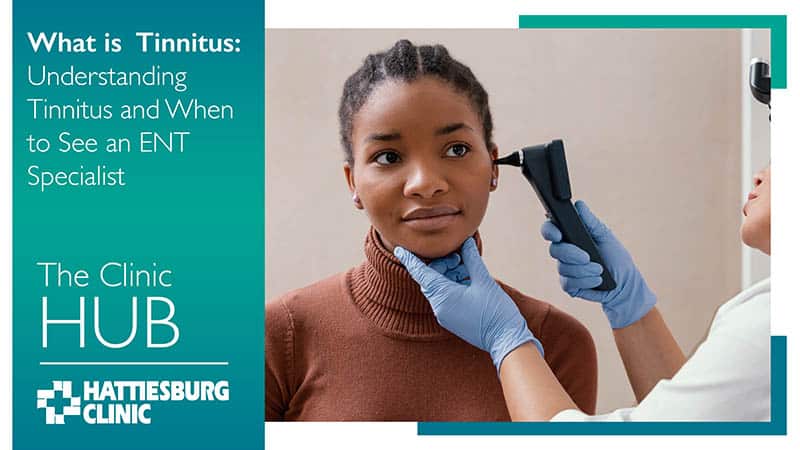
Understanding Tinnitus and When to See an ENT Specialist
Ear, nose and throat (ENT) specialists are often the first step toward answers when changes in hearing or unusual sounds begin to interfere with daily life. These physicians are uniquely trained to diagnose and treat a wide range of hearing and balance disorders, including tinnitus, a common condition often described as noise in the ears without an external source.
- What is Tinnitus?
- What Does Tinnitus Sound Like?
- Common Causes of Tinnitus
- When Should You See an ENT Specialist?
- How is Tinnitus Diagnosed?
- Treatment Options for Tinnitus
- Tips for Managing Tinnitus at Home
- Why Choose Hattiesburg Clinic
What is Tinnitus?
Tinnitus is commonly described as a ringing in the ears, but for many people, it can sound like buzzing, humming, clicking or even roaring. It’s not a disease itself, but rather a symptom of an underlying issue affecting the auditory system. For some, tinnitus is a minor annoyance, but for others, it can significantly impact daily life, concentration and sleep.
“Many people experience tinnitus at some point in their lives, but when the sound becomes persistent or disruptive, it’s important to seek evaluation. An ENT specialist can help determine whether hearing loss, ear conditions, or other factors may be contributing,” J. Logan Sobiesk, MD, with Hattiesburg Clinic Ear, Nose & Throat said.
Millions of people experience tinnitus at some point, making it one of the most common ear-related concerns. While it can occur at any age, it is especially prevalent among older adults and individuals exposed to frequent or prolonged loud noise. Because tinnitus is usually a sign of another condition such as hearing loss, ear blockage or circulatory issues, understanding the root cause is key.
What Does Tinnitus Sound Like?
Tinnitus is not a one-size-fits-all experience. The type of sound, its intensity and how often it occurs can vary widely from person to person. Common descriptions of tinnitus include ringing, buzzing, hissing, clicking, roaring or pulsing, often in rhythm with the heartbeat.
Some people hear these sounds in one ear, while others notice them in both. The sound may be constant or come and go intermittently. For some, it’s only noticeable in quiet environments.
The severity of the noise can vary. Mild tinnitus may be easy to ignore, while more severe cases can lead to frustration, anxiety and sleep disturbances. Understanding your specific symptoms is an important first step in identifying potential causes and solutions.
Common Causes of Tinnitus
Damage to the inner ear is one of the leading causes of tinnitus, but tinnitus can stem from a variety of underlying conditions. Identifying the cause is essential for determining the most effective treatment approach.
Some of the most common causes include:
- Hearing loss: Hearing loss can be age-related or caused by damage to the inner ear.
- Earwax buildup: Blockage in the ear canal can alter hearing and trigger tinnitus symptoms.
- Ear infections: Infections can cause inflammation and fluid buildup, affecting how sound is processed.
- Exposure to loud noise: Repeated exposure to loud environments can damage the delicate structures of the inner ear.
- Head or neck injuries: Trauma can impact nerves or blood flow related to hearing.
- Circulatory system issues: Problems with blood flow can result in pulsatile tinnitus, often described as a rhythmic sound.
“One of the most common causes of tinnitus is exposure to loud noise. Protecting your hearing with ear protection and limiting prolonged exposure to loud environments can go a long way in preventing long-term ear damage,” Dr. Sobiesk said.
Because there are so many possible causes, a proper evaluation is crucial. Treating the underlying issue often leads to improvement in tinnitus symptoms.
When Should You See an ENT Specialist?
Occasional ringing in the ears may not be cause for concern. However, there are situations where medical evaluation is important.
You should consider seeing an ENT specialist if you experience:
- Tinnitus lasting more than a few weeks
- Sudden or rapid hearing loss
- Ringing or noise in only one ear
- Pulsating sounds that match your heartbeat
- Tinnitus accompanied by dizziness or balance issues
- Symptoms that interfere with sleep, focus or daily activities
These signs may indicate an underlying condition that requires attention. An ENT specialist can assess your ear health, evaluate your hearing and determine whether further testing or treatment is needed. Early evaluation not only helps identify the cause but can also prevent symptoms from worsening over time.
How is Tinnitus Diagnosed?
If you visit an ENT specialist for tinnitus, the appointment is typically straightforward and focused on understanding your symptoms and medical history.
Here’s what you can expect:
- Medical history review: Your provider will ask about your symptoms, when they began and any factors that may make them better or worse.
- Physical examination: This exam is a thorough look at your ears, nose and throat to check for blockages, infections or structural issues.
- Hearing tests: These tests measure your ability to hear different tones and frequencies and can help detect hearing loss.
- Imaging tests (if needed): In some cases, scans such as an MRI or CT may be recommended to rule out structural concerns.
- Medication and lifestyle review: Your provider may evaluate medications, noise exposure and other habits that could contribute to symptoms.
This comprehensive approach allows the specialist to pinpoint possible causes and develop a personalized treatment plan.
Treatment Options for Tinnitus
Treatment for tinnitus depends largely on its underlying cause. While there may not always be a complete cure, many effective options can help manage and reduce symptoms.
Common treatment approaches include:
- Earwax removal: Clearing blockages can restore normal hearing and reduce tinnitus.
- Treating ear infections: Addressing inflammation or fluid buildup can resolve symptoms.
- Hearing aids: These can improve hearing and make tinnitus less noticeable, especially in patients with hearing loss.
- Medication adjustments: If a medication is contributing, your provider may recommend alternatives.
- Lifestyle changes: Reducing noise exposure and improving overall health can make a significant difference.
- Stress management techniques: Stress can worsen tinnitus, so relaxation strategies can be beneficial.
The goal of treatment is not only to reduce the sound itself but also to improve quality of life. Many patients find that with the right combination of therapies; tinnitus becomes much more manageable.
“While tinnitus can be frustrating, many patients find relief once the underlying cause is identified. Treatments options can be customized to fit each patients needs and lifestyle to improve quality of life,” Sobiesk said.
Tips for Managing Tinnitus at Home
In addition to medical treatments, there are several steps you can take at home to help manage tinnitus:
- Avoid loud noise exposure whenever possible
- Use hearing protection in noisy environments
- Limit caffeine and nicotine, which can worsen symptoms
- Practice stress management, such as deep breathing, meditation or exercise
- Use background or white noise at night to improve sleep
- Maintain good cardiovascular health through diet and regular activity
These strategies can help reduce the intensity of symptoms and make tinnitus less disruptive in your daily life.
Why Choose Hattiesburg Clinic
Tinnitus is often easy to ignore at first, especially if it comes and goes. However, persistent or worsening symptoms should not be overlooked. Early evaluation can help identify the cause, rule out more serious conditions, and provide access to treatments that improve your comfort and quality of life.
If you’re experiencing ongoing ringing, buzzing or other unusual sounds in your ears, an ENT evaluation is an important next step. A specialist can help determine what’s causing your symptoms and guide you toward effective treatment options tailored to your needs.
At Hattiesburg Clinic Ear, Nose & Throat, patients have access to experienced specialists, advanced diagnostic tools and a patient-centered approach to care. Whether your symptoms are mild or more disruptive, seeking care can make a meaningful difference and can help you get back to focusing on what matters most in your daily life.
###
About Hattiesburg Clinic Ear, Nose & Throat:
Hattiesburg Clinic Ear, Nose & Throat providers specialize in ear, nose, throat, allergy testing, hearing, voice and swallowing, facial plastic surgery and sinus care. Ear, nose and throat (ENT) doctors, also called otolaryngologists, provide treatment for conditions of the head and neck. Conditions of the ears, nose and throat range in severity and symptoms. Because they work together, a problem in one of these areas can affect all three.
About Hattiesburg Clinic:
Hattiesburg Clinic is Mississippi’s largest privately-owned, multispecialty clinic. Founded in 1963, Hattiesburg Clinic has expanded to include over 450 physicians and providers, along with 2,500 employees, serving patients across more than 17 counties in Mississippi. Hattiesburg Clinic is committed to being the health care provider of choice in the communities we serve.