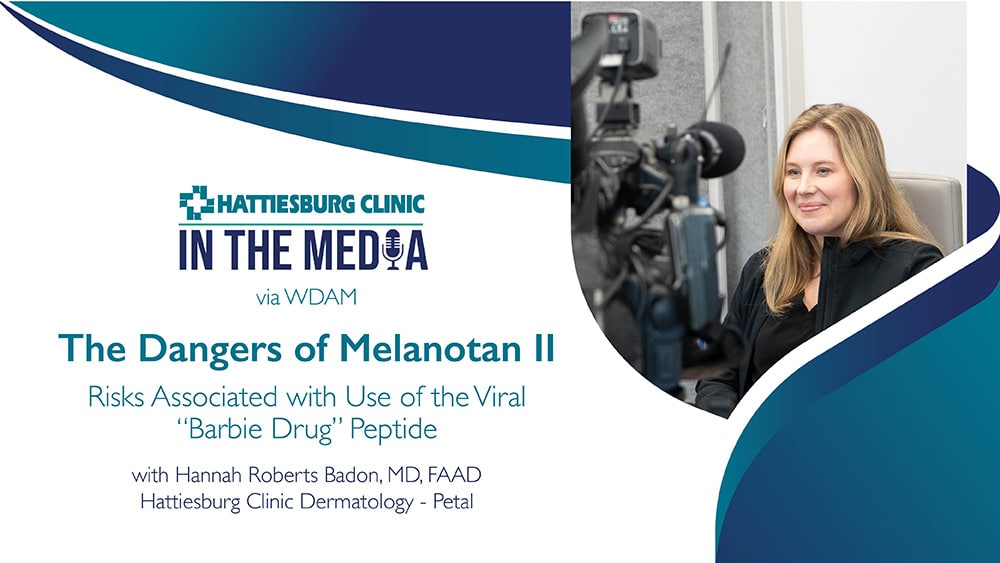
Risks Associated with Use of the Viral “Barbie Drug” Peptide
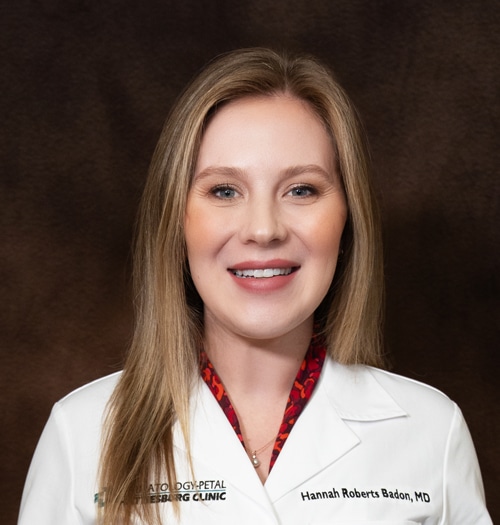
In an interview with WDAM, Hannah Roberts Badon, MD, FAAD, with Hattiesburg Clinic Dermatology – Petal discussed Melanotan II, the viral peptide used for tanning.
Melanotan II is a form of alpha-melanocyte-stimulating hormone that creates the pigmentation of skin. Humans naturally make this hormone, but melanotan II, also known as MTII, is an extremely potent derivative that can lead to melanoma, brown or black discoloration of the nails and even the fatal destruction of muscle cells. People use melanotan II to achieve a tan.
“It is used purely for cosmetic use by folks to give them a darker tan,” Hannah Roberts Badon, MD, FAAD, with Hattiesburg Clinic Dermatology – Petal said. “It is not FDA approved for any medical condition and is actually illegal in most countries.”
In the United States, melanotan II is not approved by the FDA and cannot be legally sold or marketed as a drug, supplement or cosmetic product, nor is it used in standard medical practice. Because MTII is largely unregulated, there is no standard for purity, sterility or dosing.
In this article:
- Risks of Melanotan II Use
- Tanning Alternatives to Melanotan II
- What to be Aware of When Learning About Dermatologic Products on Social Media
Risks of Melanotan II Use
“MT II can cause a lot of dermatologic issues, but in addition to that, facial flushing, nausea, vomiting, headaches, also sexual dysfunction and issues with blood pressure,” Dr. Badon said.
Other side effects of melanotan II use include:
- Melanoma
- Darkening moles or new and atypical moles or freckles
- Melanonychia (brown or black discoloration of the nails)
- Rhabdomyolysis (potentially fatal destruction of muscle cells)
“For dermatologists, we worry about the melanocytes the most,” Badon said. “It can darken your existing moles, or nevi, and freckles. It can create new moles and freckles, and it can make it very, very difficult to identify skin cancer,” Badon said. “There are additional concerns that melanotan can cause melanoma, which is the scariest cancer in all of dermatology because it can metastasize. It frequently goes to brain, bone and other organs.”
Melanotan II is not FDA approved, it is typically manufactured in unregulated environments which can lead to a high risk of contamination or impurities and inaccurate dosing. Additionally, because MTII is typically administered subcutaneously via injection, there is a risk for infection at the injection site.
While the short-term risks of melanotan II use are documented and continue to become increasingly common, the long-term risks and side effects are not yet known.
“We know the short-term risks of melanotan and I’ve already seen it in my office multiple times,” Badon said. “I think years from now we may be looking at a big rise in skin cancer, especially among the southern states, after use of melanotan.”
Tanning Alternatives to Melanotan II
There is no such thing as a “safe” UV tan; the reddening or browning of skin due to UV exposure is a sign of skin damage. While all UV tans—like those from the sun and tanning beds—pose a risk for premature aging and skin cancer, there are alternative, UV-free ways to tan.
“If you really want a tan, please go get a spray tan,” Badon said. “I love a spray tan, I love a foam, a mousse, a lotion.”
Topical tanning products like mousses, lotions, foams and sprays do not require UV and therefore do not pose a risk for skin cancer and premature aging. Sunless tanners contain the active ingredient dihydroxyacetone, or DHA, which is a coloring agent that combines with the amino acids in the skin to create a tanning effect. Unlike UV rays which penetrate deep into the skin, topical tanning products only affect the outermost dead cell layer of the skin.
“If you feel like you just absolutely have to use MTII, please go to your doctor and get yourself a baseline skin exam,” Badon said.
What to be Aware of When Learning About Dermatologic Products on Social Media
Melanotan II is known on social media as the “Barbie drug” and has gained traction as a viral tanning “hack.” With this virality comes a barrage of information from sources across the internet, some credible, some not. When it comes to medical and health advice or products, it is important to know the difference between a credible source of information and someone who may not be qualified or may be sharing misinformation.
“There’s a lot of ‘experts’ giving skin cancer advice, and I think it’s really important to know who is giving you the information,” Badon said. “If someone is telling you a product is 100% safe, there are no downsides, it’s the best thing since sliced bread, then you really need to take a good look at it, because there is nothing that is that perfect.”
It is also important people understand that just because something is natural does not mean it is healthy or safe.
“I also think when people tout these new peptides and melanotan as 100% natural it is a bit of misleading because so is poison ivy,” Badon said. “Just because things are 100% natural or are things we already make in our body, it doesn’t make it safe.”
When differentiating between credible information and misinformation, it is also important for people to know what makes a study credible.
“It’s also important to know if they are looking at peer reviewed studies. I see things all the time talking about a study from this or a study from that. Not all studies are created equally,” Badon said. “A peer-reviewed study means a study that has been evaluated by a jury of that specialty’s peers, has been able to be repeated multiple times, and has been published in a medical journal.”
View Dr. Badon’s full interview with WDAM here.
###
About Hattiesburg Clinic Dermatology – Petal:
Hattiesburg Clinic Dermatology – Petal specializes in comprehensive dermatologic care for all ages, including pediatric dermatology. Our providers are dedicated to the diagnosis, treatment and prevention of various skin-related conditions, including acne, eczema, psoriasis, skin cancer and more. We also offer cosmetic dermatology services aimed to improve skin tone, texture and complexion.
About Hattiesburg Clinic:
Hattiesburg Clinic is Mississippi’s largest privately-owned, multispecialty clinic. Founded in 1963, Hattiesburg Clinic has expanded to include over 450 physicians and providers, along with 2,500 employees, serving patients across more than 17 counties in Mississippi. Hattiesburg Clinic is committed to being the health care provider of choice in the communities we serve.