Understanding Rhinitis: Causes, Symptoms and Management
Whether during a seasonal change, a cold or exposure to irritants, most people have experienced nasal congestion or a “runny nose” at some point. While these symptoms may be seen as minor or temporary, they could be the sign of an underlying condition known as rhinitis. Despite rhinitis being common, many people live with chronic discomfort unnecessarily by not understanding their symptoms.
One of the challenges with rhinitis is that there are multiple types, each with different triggers and treatment approaches. Understanding the causes, symptoms and types of rhinitis is essential for effective treatment management and achieving long-term relief from nasal congestion.
What Is Rhinitis?
Rhinitis is inflammation of the nasal passages. This inflammation can be triggered by a variety of factors such as allergens, irritants, infections or underlying health conditions. When the lining of the nasal passages becomes inflamed, it produces excess mucus, leading to symptoms like congestion, sneezing and a runny nose.
Rhinitis can be acute or chronic. Acute rhinitis is short-term, often lasting only a few days to a couple of weeks, and is typically associated with infections like the common cold. Chronic rhinitis, on the other hand, persists for weeks, months or even longer, often requiring ongoing management.
Symptoms of Rhinitis
Rhinitis symptoms can vary in severity and duration, but they are commonly described as:
- Nasal congestion or “stuffy nose”
- Runny nose, which may produce clear or thick discharge
- Frequent sneezing
- Postnasal drip, where mucus drains down the back of the throat, commonly known as sinus drainage
- Itchy nose, eyes or throat (especially in allergic forms)
- Reduced or altered sense of smell
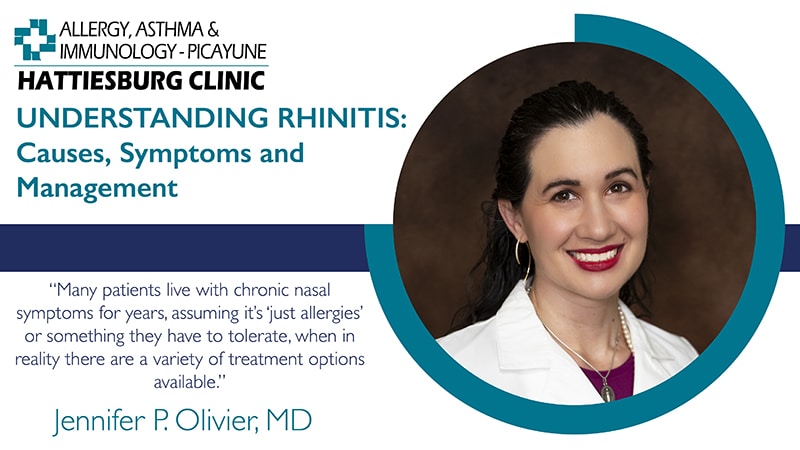
“These symptoms may seem mild, but living with persistent nasal congestion can significantly interfere with daily activities,” Jennifer P. Olivier, MD, with Hattiesburg Clinic Allergy, Asthma & Immunology – Picayune said. “Many patients live with chronic nasal symptoms for years, assuming it’s ‘just allergies’ or something they have to tolerate, when in reality there are a variety of treatment options available.”
Types of Rhinitis
Allergic Rhinitis
Allergic rhinitis is one of the most common forms of rhinitis and is caused by an overactive immune response to airborne allergens such as pollen, dust or pet dander. When exposed to triggers, the body releases histamine and other chemicals that lead to inflammation and cause allergy symptoms. Symptoms often follow a seasonal pattern but can also occur year-round depending on exposure.
Nonallergic Rhinitis
Nonallergic rhinitis does not involve the immune system in the same way as allergic rhinitis. Instead, it is triggered by environmental factors, such as weather changes, that irritate the nasal passages.
Infectious Rhinitis
Infectious rhinitis is most commonly associated with infections, such as a common cold. It typically presents with a runny nose, congestion and sometimes fever or sore throat. This type is usually short-lived and resolves as the infection clears.
Causes and Risk Factors
Rhinitis can develop due to a variety of factors and understanding these can help identify triggers, guide treatment and assist with prevention management.
- Environmental exposures: Pollen, dust, mold and pollution can all irritate the nasal passages.
- Genetic predisposition: Individuals with a family history of allergies are more likely to develop allergic rhinitis.
- Occupational irritants: Exposure to chemicals, fumes or dust in the workplace can increase risk.
- Underlying health conditions: Conditions such as asthma are often linked with rhinitis, particularly allergic forms.
Identifying specific causes is an important step in managing symptoms effectively. Although rhinitis is often considered a minor condition, its impact on daily life can be significant. Persistent nasal symptoms can disrupt sleep, leading to fatigue and decreased energy levels. Poor sleep quality can, in turn, affect concentration, memory and mood.
Constant sneezing, congestion and discomfort can make it difficult to focus or participate fully in daily activities. Additionally, rhinitis is closely connected to other respiratory conditions, particularly asthma and sinus disorders. Poorly managed rhinitis can exacerbate these conditions, leading to more frequent symptoms and complications.
Diagnosis
Diagnosing rhinitis begins with a thorough evaluation of symptoms and medical history. Your physician or provider will typically ask about symptom patterns, duration and potential triggers.
A physical examination of the nasal passages may reveal inflammation, swelling or excess mucus. To determine whether allergies are involved, your physician or provider may recommend allergy testing, which may involve blood or skin prick test to identify allergic triggers.
Treatment Options, Prevention and Management
Treatment for rhinitis depends on the type and severity of symptoms, but several effective options are available:
- Antihistamines: These medications help reduce allergy symptoms by blocking histamine release.
- Saline rinses: Gentle nasal irrigation can help clear mucus and reduce irritation.
- Allergy immunotherapy: For those with persistent allergic rhinitis, this long-term treatment helps desensitize the immune system to specific allergens through allergy injections or vaccinations.
- Trigger avoidance: Identifying and minimizing exposure to known triggers is a key part of management.
“Finding a solution and treatment plan is not a one size fits all,” Dr. Olivier said. “It’s important to work with your physician or provider to find treatment options that help you manage symptoms and find long-term relief.”
While it may not always be possible to fully stop rhinitis from occurring, several strategies can help reduce symptoms and improve quality of life:
- Environmental control: Regular cleaning to reduce dust, using air purifiers and controlling humidity can limit exposure to irritants.
- Seasonal planning: Monitoring pollen counts and limiting outdoor activities during peak seasons can help reduce exposure to allergens.
- Medication adherence: Taking prescribed medications consistently is essential for effective symptom control.
Taking proactive steps can make a noticeable difference, particularly for individuals with chronic or recurring symptoms. Discussing any changes in symptoms or severity with your physician and provider, can help them create a treatment plan to better manage rhinitis.
When to See a Physician
While occasional nasal symptoms are common, certain situations warrant medical attention:
- Symptoms lasting more than a few weeks
- Frequent or worsening congestion
- Significant impact on sleep or daily activities
- Suspected allergies that require testing or long-term management
Rhinitis is a common yet often overlooked condition that can significantly affect daily life. Whether caused by allergies, irritants, infections or other factors, rhinitis is highly manageable with the right approach. Seeking care early can help prevent complications and ensure appropriate treatment.
Accurate diagnosis is key to selecting the most effective treatment. From medications and lifestyle adjustments to advanced therapies like immunotherapy, there are many options available to help individuals find relief. If symptoms persist or interfere with your quality of life, seeking guidance from a physician or provider is an important step. With proper care and management, most people can successfully control their symptoms and breathe easier.
###
About Hattiesburg Clinic Allergy, Asthma & Immunology – Picayune:
Hattiesburg Clinic Allergy, Asthma & Immunology – Picayune provides specialized care through testing and treatment of allergies and asthma in pediatric and adult patients. Our providers focus on evaluating, diagnosing, treating and managing abnormal immune system responses that cause allergies and asthma.
About Hattiesburg Clinic:
Hattiesburg Clinic is Mississippi’s largest privately-owned, multispecialty clinic. Founded in 1963, Hattiesburg Clinic has expanded to include over 450 physicians and providers, along with 2,500 employees, serving patients across more than 17 counties in Mississippi. Hattiesburg Clinic is committed to being the health care provider of choice in the communities we serve.