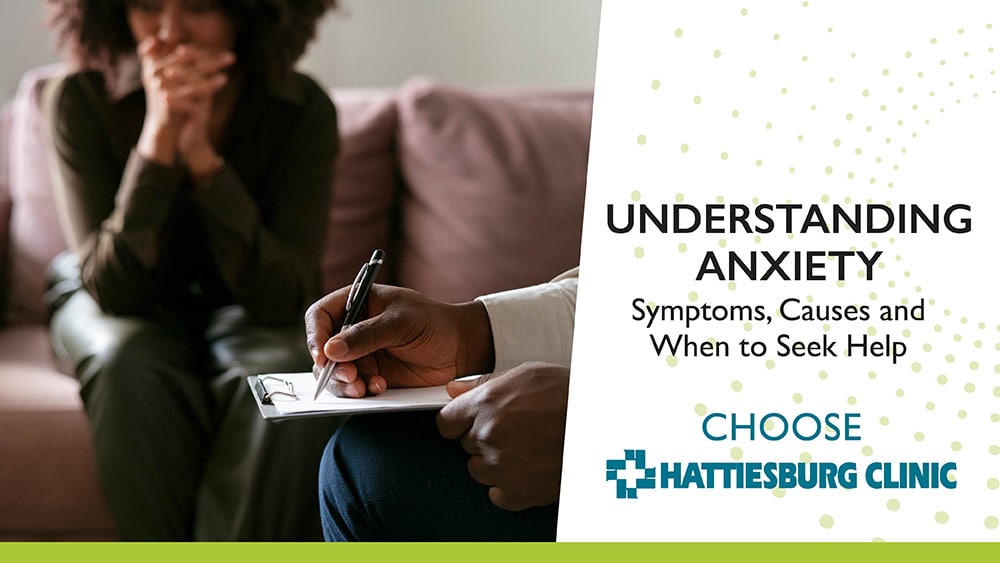
Anxiety: Symptoms, Causes and When to Seek Help
According to the National Institute of Mental Health, approximately 19.1% of adults in the United States have an anxiety disorder. Anxiety is one of the most common mental health concerns in the United States that impacts millions of adults.
- What is Anxiety?
- What Does Anxiety Feel Like?
- Types of Anxiety Disorders
- What Causes Anxiety
- When Does Anxiety Become a Medical Concern
- How Anxiety is Diagnosed?
- Treatment Options for Anxiety
- Why Choose Hattiesburg Clinic
What is Anxiety?
Anxiety is your body’s natural response to stress, uncertainty or perceived danger. In some situations, anxiety can motivate you to prepare for an important event, stay alert in challenging situations or respond quickly when needed. For example, you may feel anxious before a job interview, medical appointment or major life event.
“Anxiety is a normal part of life, but it’s important to recognize when it begins to interfere with your daily routine. Those are signs to seek professional support.,” Lynwood C. Wheeler, PhD, ABPP, with Hattiesburg Clinic Psychology & Counseling explains.
When anxiety becomes persistent, overwhelming or interferes with your daily life, it may be time to seek medical help especially if it interferes with daily activities, relationships or your overall well-being. In these cases, anxiety may be more than a temporary stress response and could indicate an anxiety disorder, which is a common and highly treatable medical condition.
It can sometimes be difficult to tell the difference between normal stress and an anxiety disorder. Stress is usually tied to a specific situation and improves once that situation resolves. Anxiety, however, may persist even without a clear cause and can interfere with daily functioning. The most important thing to remember is anxiety is treatable, and support is available.
What Does Anxiety Feel Like?
Anxiety can affect your mind, body and behavior. Emotionally, many people experience excessive worry, a constant sense of unease, irritability or difficulty concentrating. It may feel like your mind is always racing or anticipating worst-case scenarios.
Anxiety also has very real physical symptoms. Some individuals notice a rapid heart rate, shortness of breath, muscle tension, fatigue or trouble sleeping. These physical symptoms can sometimes be alarming, especially when they occur unexpectedly.
“Many people are surprised to learn how strongly anxiety can affect the body,” Dr. Wheeler said. “It’s not just in your head—anxiety is a real medical condition with symptoms that can present emotionally and physically.”
Types of Anxiety Disorders
Anxiety is not one-size-fits-all. There are multiple types, and symptoms can vary from person to person in experience, symptoms and severity.
Generalized Anxiety Disorder, or GAD, generally involves persistent and excessive worry about everyday situations such as health, work or family. Social anxiety disorder involves a strong fear of social situations or being judged by others, often making social interactions feel overwhelming. Separation anxiety disorder, while often associated with children, can also affect adults and involves excessive fear related to separation from loved ones.
Panic disorders are characterized by sudden panic attacks, which may include physical symptoms such as chest pain, dizziness, shortness of breath and an intense feeling of fear. Specific phobias involve extreme fear of objects or situations, such as heights, flying or medical procedures.
What Causes Anxiety?
Anxiety does not have a single cause. Instead, it develops from a combination of biological, psychological and environmental factors. Genetics can play a role, meaning anxiety may run in families, and brain chemistry also contributes, particularly imbalances in neurotransmitters that regulate mood and stress responses.
Anxiety can also result from life experiences such as major life changes, trauma and chronic illness. Stress related to work, finances or relationships can also contribute to increased anxiety. Triggers can vary widely and should be discussed with a mental health professional to determine the most effect treatment plan.
When Does Anxiety Become a Medical Concern?
While occasional anxiety is normal, it becomes a medical concern when it begins to interfere with daily functioning. This may include persistent worry lasting six months or longer, difficulty sleeping, panic attacks or avoiding activities that are important to your work, relationships or personal well-being.
Some people find that anxiety affects their ability to concentrate or maintain relationships, while others may experience mild-to-severe physical symptoms that disrupt their daily routines.
“If anxiety is preventing you from living your life fully, that’s a clear sign it’s time to seek professional support,” Wheeler said.
Early intervention can make a significant difference. Addressing anxiety early often leads to faster improvement and better long-term outcomes.
How Is Anxiety Diagnosed?
Diagnosing anxiety begins with a conversation with a medical professional such as a primary care physician, psychologist, psychiatrist or counselor. A physician or provider will review your medical history, discuss your symptoms and ask questions about how anxiety is affecting your daily life. Screening tools or questionnaires may also be used to better understand your symptoms and experiences.
In some cases, physicians and providers may evaluate physical symptoms to rule out any potential medical conditions that can cause similar symptoms. The goal is to gain a complete understanding of your health, so the most appropriate treatment plan can be developed.
Treatment Options for Anxiety
Anxiety is highly treatable, and most people see meaningful improvement with appropriate care. Treatment can include therapy, medication, lifestyle changes or a combination of these approaches. Cognitive behavioral therapy is one of the most effective treatments for anxiety. It helps individuals identify negative thought patterns and develop healthier ways of responding to stress. Talk therapy can also provide valuable emotional support and coping strategies. In some cases, medications such as anti-anxiety medications or antidepressants may be recommended to help regulate brain chemistry and reduce symptoms.
In addition to professional treatment, daily habits can help manage anxiety. Practicing deep breathing, maintaining a regular sleep schedule and exercising regularly can all make a meaningful difference. “Reaching out for help is one of the most important steps a person can take toward improving their mental health,” Wheeler said.
Why Choose Hattiesburg Clinic
You don’t have to manage anxiety alone. Hattiesburg Clinic offers compassionate, personalized care to help patients understand and manage anxiety effectively. Providers work closely with each patient to develop individualized treatment plans.
If anxiety is affecting your daily life, speaking with a provider is an important first step. With the right support and treatment, anxiety can be managed, and patients can return to living healthier, more balanced lives.
###
About Hattiesburg Clinic Connections:
Hattiesburg Clinic Connections serves as a regional resource center for children, adolescents and adults who struggle with learning, attention problems, behavioral concerns or emotional difficulties. The team at Connections uses evidence informed guidelines as well as standard of care practices to help improve the lives of people with conditions such as attention deficit hyperactivity disorder (ADHD), dyslexia, anxiety, depression, oppositional defiant disorder (ODD) and autism spectrum disorder.
About Hattiesburg Clinic Psychiatry – Lincoln Center:
At Hattiesburg Clinic Psychiatry – Lincoln Center, we offer a variety of outpatient psychiatric services for children, adolescents and adults. These services include evaluation, diagnosis and treatment of psychiatric illnesses. Our mental health specialists have special training and experience to treat patients with many different types of psychiatric and behavioral conditions.
About Hattiesburg Clinic Psychology & Counseling:
Hattiesburg Clinic Psychology & Counseling offers a broad range of outpatient services, including research-based counseling and comprehensive psychological assessments. Our team of licensed and credentialed professionals collaborates with your medical provider to ensure continuity of care.
Our mission is to provide a caring and respectful environment for individuals of all ages, from preschool through senior adults, and families who are struggling with behavioral or emotional concerns, transitions, decisions or crises.
About Hattiesburg Clinic:
Hattiesburg Clinic is Mississippi’s largest privately-owned, multispecialty clinic. Founded in 1963, Hattiesburg Clinic has expanded to include over 450 physicians and providers, along with 2,500 employees, serving patients across more than 17 counties in Mississippi. Hattiesburg Clinic is committed to being the health care provider of choice in the communities we serve.